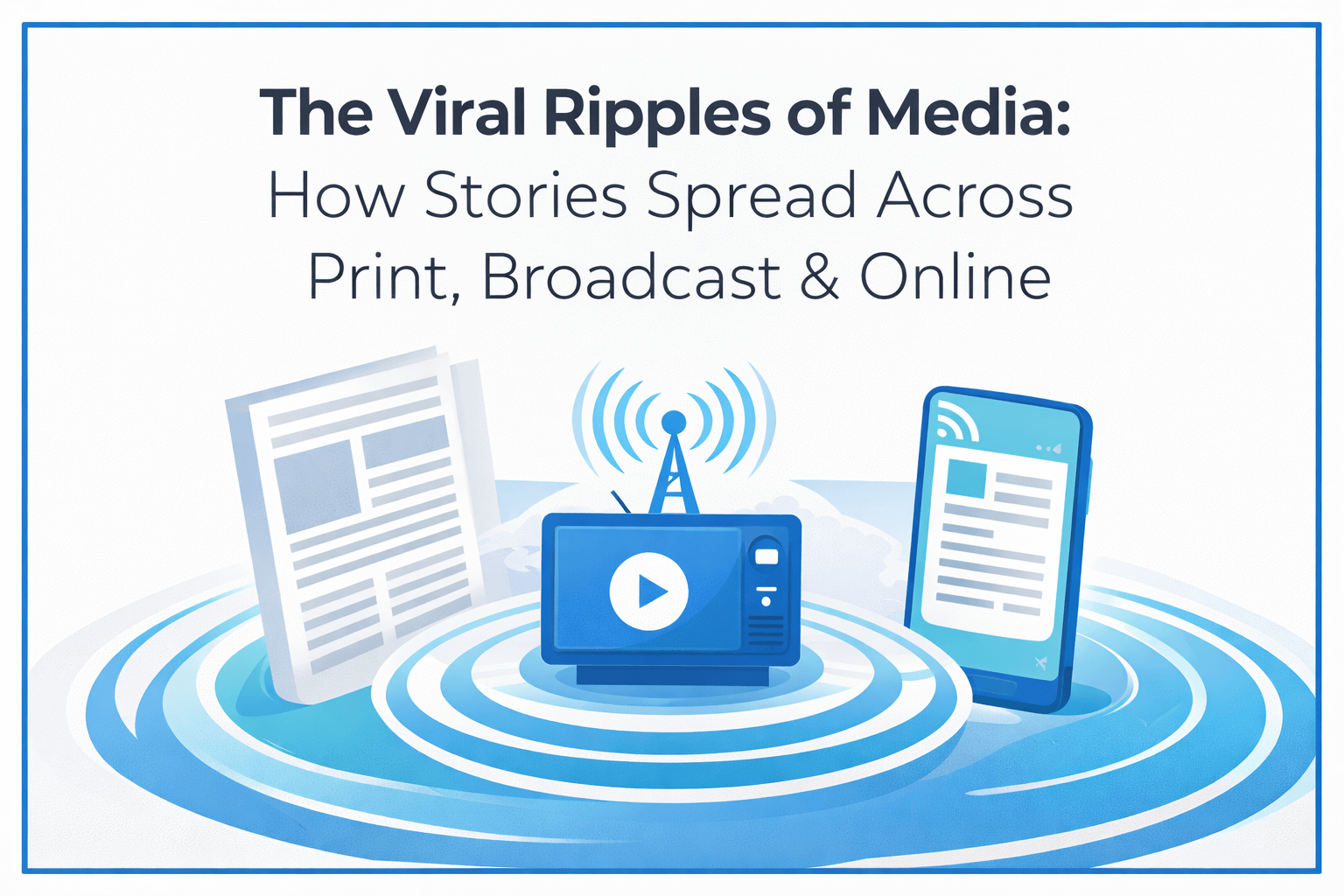
The Problems Media Monitoring Solves: Escaping "Brand Blindness"
In the modern information landscape, data doesn't just flow; it floods. Every second, thousands of articles are published, news segments are aired, and millions of social interactions occur. For the business owner or PR professional operating without a dedicated system, this landscape is a chaotic fog. This is the state of being "brand blind."
The Problem: The Information Chaos
Without a centralized way to track your brand, you are essentially trying to hear a single whisper in a hurricane. Most organizations rely on manual Google searches or occasional alerts, but these are lagging indicators. By the time you find a mention manually, the "ripple effect" has already moved from a niche blog to a major broadcast network. You aren't just missing data; you are missing the context of your own narrative.
The Solution: Comprehensive Visibility
One of the primary media monitoring benefits is the restoration of sight. It transforms "noise" into actionable intelligence. By integrating print, broadcast, and online tracking into a single dashboard, you move from a reactive state to a proactive stance, ensuring that no ripple goes unnoticed, regardless of where it starts.
Reputation Management: Preventing & Mediating Crises
A brand’s reputation takes years to build and only seconds to shatter. In a digital-first world, a negative story in a local print outlet can be scanned, shared on social media, and picked up by national TV news before your PR team has even finished their morning coffee.
The Problem: The Lag Time Fatality
Manual tracking is the enemy of crisis management. If a customer complaint or a faulty product report goes viral at 2:00 AM, and your team doesn't "discover" it until a manual search at 10:00 AM, you have lost eight hours of critical response time. In those eight hours, the story has likely mutated, gained momentum, and reached your stakeholders. The problem isn't just the crisis itself—it's the silence from your end during the most volatile period of the story's life.
The Solution: Real-Time Alerts and Sentiment Analysis
Effective brand reputation protection requires instant notification. Modern tools use AI to detect shifts in sentiment. If the "vibe" around your brand turns negative suddenly, you are alerted instantly. This allows you to "mediate the crisis" by injecting your perspective into the narrative while it is still a ripple, preventing it from becoming a tidal wave.
Market & Industry Insights: Finding the Signal in the Noise
Many businesses operate in a vacuum, focusing so hard on their internal operations that they miss the tectonic shifts happening in their industry.
The Problem: The Cost of Ignorance
The "noise" of the industry contains the blueprint for your next big product or service, but it's buried. Companies without monitoring often find themselves reacting to industry trends 18 months too late. They see a competitor launching a feature that the market has been "whispering" about for a year. This lack of PR strategy integration means you are always playing catch-up, wasting resources on ideas that are already becoming obsolete.
The Solution: Strategic Listening
Media monitoring allows you to track keywords beyond your brand name. By monitoring industry terms and "market pain points" across print and online journals, you gain competitive intelligence. You see the trends forming in real-time, allowing you to pivot your messaging and product development to meet the market where it is going, not where it was.
Competitive Analysis: Knowing Their Move Before They Make It
If you aren't monitoring your competitors, you are essentially playing a game of chess while blindfolded. Your rivals are constantly communicating with the media, and those communications hold the key to their strategy.
The Problem: Being Outmaneuvered
- The Silent Launch: Competitors may be testing new messaging in smaller, regional print markets that you aren't watching.
- Share of Voice Erosion: Without data, you don't realize that a competitor is slowly taking over the "expert" status in your niche through frequent broadcast appearances.
- Resource Misallocation: You might be spending heavily on a channel where your competitor has already secured a dominant, unshakeable presence.
The Solution: Benchmarking and Intelligence
By applying media monitoring to your peers, you can see exactly where they are succeeding and where they are failing. You can identify gaps in their PR strategy—perhaps they are ignoring a specific medium like podcasts or trade magazines—and move in to claim that territory.
Identifying Influencers: Finding the Right Megaphone
The "viral ripple" is usually started by a specific individual or outlet. The challenge is that the most influential voices aren't always the ones with the largest following; they are the ones with the most trust.
The Problem: Wasted Spend and "Shouting into the Void"
Many PR professionals waste thousands of dollars pitching to "big name" journalists or influencers who have no actual resonance with their target audience. This is a "shotgun approach" that results in high costs and low conversion. Without monitoring, you don't know who is actually driving the conversation about your specific industry. You might be targeting a national newspaper when a specific trade blogger actually has more sway over your buyers.
The Solution: Precision Targeting
Media monitoring tools track who is talking about your topics and, more importantly, who is being *quoted* and *shared*. This identifies the true "narrative leaders." By shifting your PR efforts toward these high-impact individuals, you ensure that your message is carried by the most effective megaphones, maximizing your reach while minimizing wasted effort.